
NVRblink Hub
A small, pre-built appliance with NVRblink already installed and configured — face recognition, number plate recognition, and full remote support for installers, out of the box. Plug in your cameras and power, and it's already recording.
Built for a specific job
Hub is sized for 1 to 32 cameras— a small range of fixed hardware configurations, not a scaled-down version of something bigger. Tell us how many cameras you have and we'll match you to the right build; it arrives ready to record — plug in your cameras and power, and NVRblink is already running.
If you need more than 32 cameras, or want to run NVRblink on hardware you already own, the regular Windows app remains a completely free, unrestricted option — Hub is an alternative for people who'd rather not provide or set up a PC themselves.
Everything you'd expect from an NVR
The same recording engine as the NVRblink Windows app, running headless on dedicated hardware.
Continuous or motion-triggered recording
Record around the clock or only when something moves - set per camera, with adjustable motion sensitivity and post-roll so you never miss the seconds before an event.
ONVIF auto-discovery
Point Hub at your network and it finds ONVIF-compatible cameras itself, test-connects to each one, and lets you pick the exact recording profile and resolution you want.
Multi-camera live view
A drag-and-drop live grid across every camera on the box, sized to how many you actually have - 1 camera or the full 32.
Privacy masking
Block out parts of a camera's view that shouldn't be recorded at all - a neighbour's window, a public footpath - directly in the recording, not just the live display.
Two-way audio talk-back
Talk through Hub's built-in speaker/mic jack straight from the live view - no extra hardware, and no dependence on your cameras supporting an audio back-channel.
Built-in networking, so you never have to touch the client's
Two purpose-built services that come with every Hub, no configuration required.
Cameras get their own network
Plug your PoE switch of cameras straight into Hub's second Ethernet port. Our own networking service automatically assigns and maintains every camera's IP address on a network of its own - completely separate from your client's own network, with its own built-in DHCP. The cameras never touch the client's network at all: no IP conflicts, nothing for their IT provider to worry about, and a compromised or misbehaving camera can't reach anything else. Standard across Hub tiers, not a paid add-on.
Remote access that never breaks
Our own DNS hostname updater keeps a client's custom hostname pointed at their Hub automatically, polling to detect an IP change the moment it happens and updating the record itself. Remote access keeps working through a change of broadband provider, a router reboot, or anything else that would otherwise silently break it.
AI recognition, built in
Commercial licenseHub doesn't just record who and what passes a camera — it can recognise them. Face Recognition and ANPR run entirely on the device itself, and unlock on a commercial NVRblink license.
Face Recognition
Enrol known faces once, then get an email the moment one of them - or anyone unrecognised - shows up on camera. Every unmatched face is kept in a review queue so you can promote it to a known person later.
Number Plate Recognition (ANPR)
Reads vehicle plates as they pass a designated camera, checks them against a known list, and emails you on an unexpected match. Every unmatched plate is logged with a photo, sighting count, and timestamp.
Retail loss-prevention
Commercial licenseA purpose-built suite for shops and retail sites — watchlist alerts, till integration, and AI-assisted concealment detection, all running on the device itself.
Watchlist alerts
Flag a known individual - a known shoplifter, say - and any recognition match anywhere on the system triggers an alert automatically. Enforced on the device itself, not just in the app, so it can't be bypassed.
Virtual receipt printer
Hub emulates a standard network receipt printer, so your existing till or EPOS system can print to it exactly like a normal printer - no integration work. The parsed receipt overlays on that till's camera feed for a short window after every sale.
AI concealment detection
On-device pose-estimation AI watches for a possible concealment gesture - a hand visiting a shelf, then lingering near the body - and flags it for a human to review. It's a prompt to take a look, never an automatic accusation.
Manage it from anywhere
The apps you already use
The same Android, iOS, and browser companion apps that connect to an NVRblink Windows install connect straight to Hub too - nothing new to download or learn.
Fully browser-based admin
No software to install on your own PC at all - cameras, users, recognition settings, and everything else are managed from any browser on your network.
Cloud Storage & Hostname add-ons
The same optional add-ons as the Windows app, on the same NVRblink account - off-site cloud backup of your recordings, and a free custom hostname for remote access without a static IP.
Built for installers, not just end users
Hub is licensed and supported through the same NVRblink Partners system your team already uses for Windows installs — so a fleet of Hub appliances doesn't mean a second, separate way of managing your clients.
One partner dashboard, every device
Activate a license against a client and site from your Partners portal, and Hub checks in on a regular heartbeat — giving you a live/offline status for every device you've deployed, without a support call telling you first.
Feature control, per site
Face Recognition, ANPR, and third-party monitoring integration are all license-gated features you control from the Partners portal — switch them on or off for a specific client without touching the device itself.
Open for integration
Scoped API keys let your own tools — or a third-party monitoring platform — pull live snapshots, clips, streams, and events from specific cameras only, without ever exposing the rest of the system.
Remote sites
Satellite licensingWatching more than one location doesn't mean a second system to manage — or a second thing to lock down. A “Satellite” is a lean, single-purpose Hub for a remote or lightly-staffed site: once it's set up, its own local screen shows nothing but the live camera grid. Every real bit of management — cameras, users, settings, plus live viewing and recent recordings from every site — happens back at your Main Hub.
One API key to connect a site
A Satellite is a lean, single-purpose Hub for a remote or lightly-staffed location - a storage unit, a second small site. Paste its API key into your Main Hub and it's connected.
Locked down to live view, on purpose
Once initial setup is done, a Satellite's own local screen shows nothing but the live camera grid - no camera or user management, no settings to misconfigure by accident on-site. Everything else happens back at your Main Hub.
Built for sites that come and go
A Satellite at a site you only visit occasionally is expected to drop offline between visits - Hub handles that gracefully, showing a clear "Site offline" status rather than treating it as an error.
Satellite pricing hasn't been announced yet — it's planned as a recurring subscription, priced lower than a main Hub license.
Security
Everything below runs by default — nothing here is a paid add-on or something you need to remember to turn on.
Tamper-evident audit log
Every login, setting change, and camera edit is written into a hash-chained audit trail. Alter a past entry and the chain breaks - it's built to make silent tampering detectable, not just logged.
Two-factor authentication
Standard TOTP-based 2FA (Google Authenticator, Authy, and similar apps) for admin sign-in, with one-time recovery codes if you lose your device.
Account lockout
Repeated failed sign-ins lock the account out for a cooldown period - a plain, effective defense against password guessing.
Encrypted at rest
Camera passwords and other credentials are encrypted on disk, never stored in plain text.
A real HTTPS certificate, if you want one
Remote access works out of the box over a self-signed certificate, or you can point Hub at your own domain and it manages a genuine trusted certificate via Let's Encrypt automatically.
One-click remote access setup
Optional UPnP port forwarding gets remote access working through most home/office routers without digging through router settings yourself.
Under the hood
Software specifics for anyone who wants them. Exact hardware specifications per camera-count tier will be published closer to launch.
Runs on Linux
Built to run natively on Linux - no Windows licence, no Windows updates to manage, on a small, purpose-built appliance.
Open camera standards
Connects over ONVIF and RTSP, the standards nearly every IP camera on the market already speaks - no proprietary lock-in to one camera brand.
Recognition runs on the device
Face Recognition and ANPR both run entirely on-device using local neural network models - footage and recognition data are never sent elsewhere to be processed.
One account system
Cloud Storage, Hostname/DDNS, and commercial licensing all run through the same NVRblink account backend as the Windows app - no separate account, no separate portal to check.
See it in action
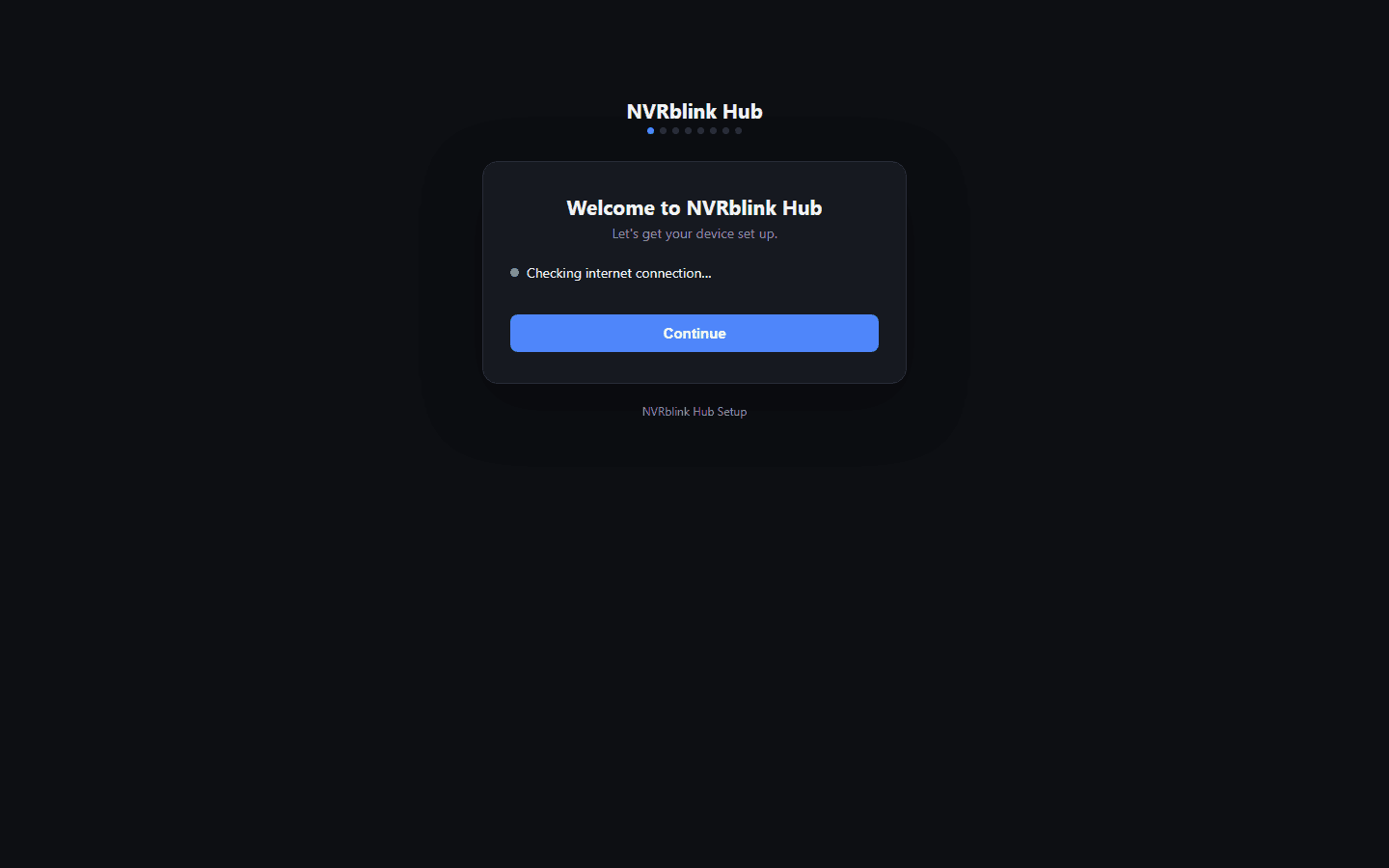
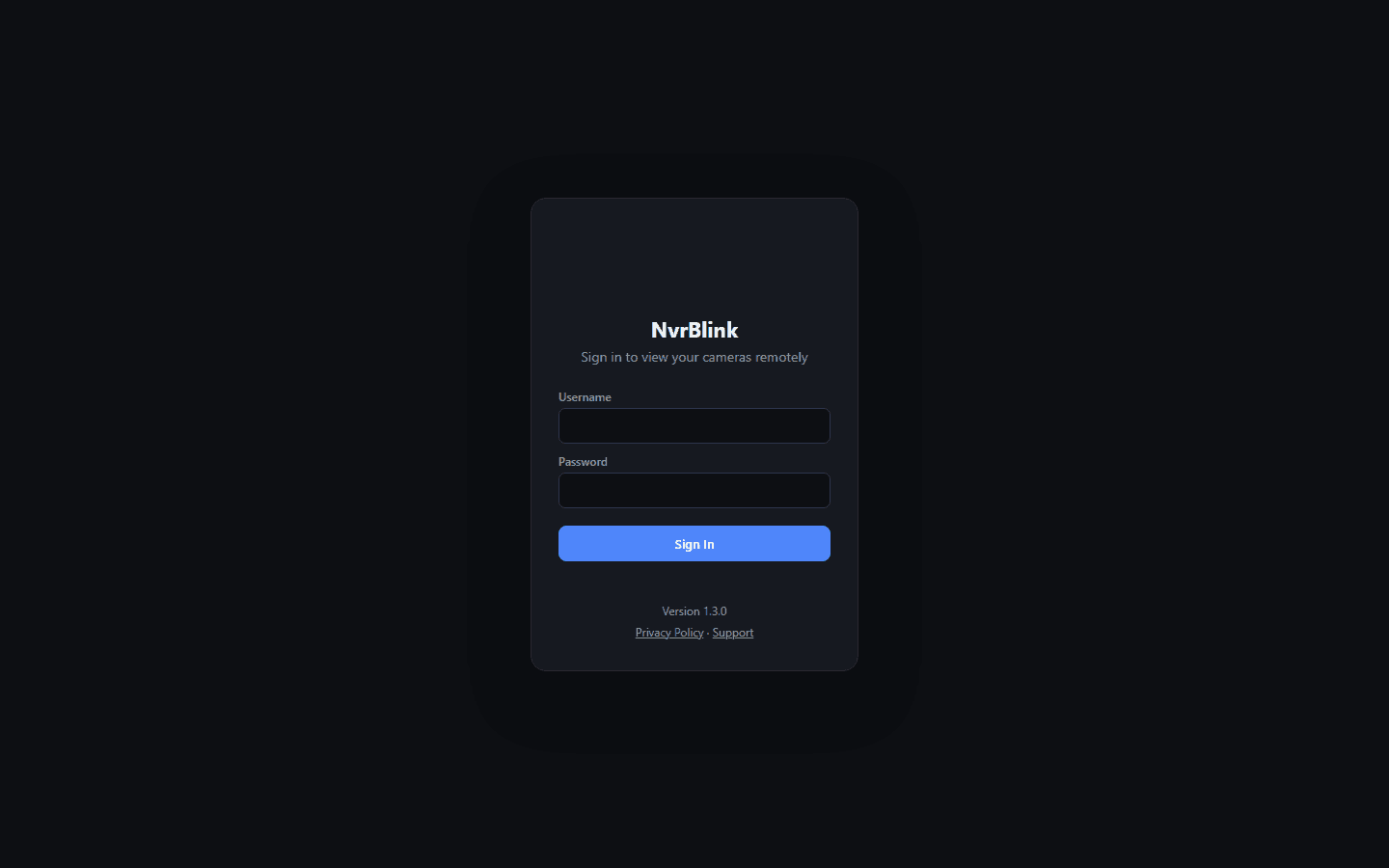
Real screens from the software as it stands today — a full walkthrough video and more screenshots are coming as launch gets closer.
How ordering works
Tell us what you need
Tell us how many cameras you have (up to 32) and a few details about your site.
We'll be in touch
We'll contact you to confirm your build and arrange payment and delivery. No payment is taken by submitting the form.
Plug in and go
Hub arrives with NVRblink already installed and configured - connect your cameras and you're recording.
Pricing
Pricing depends on your camera count and build. Get in touch below and we'll quote you — submitting the form costs nothing and takes no payment.
Order NVRblink Hub
We'll email you a confirmation and follow up to arrange payment and delivery.